
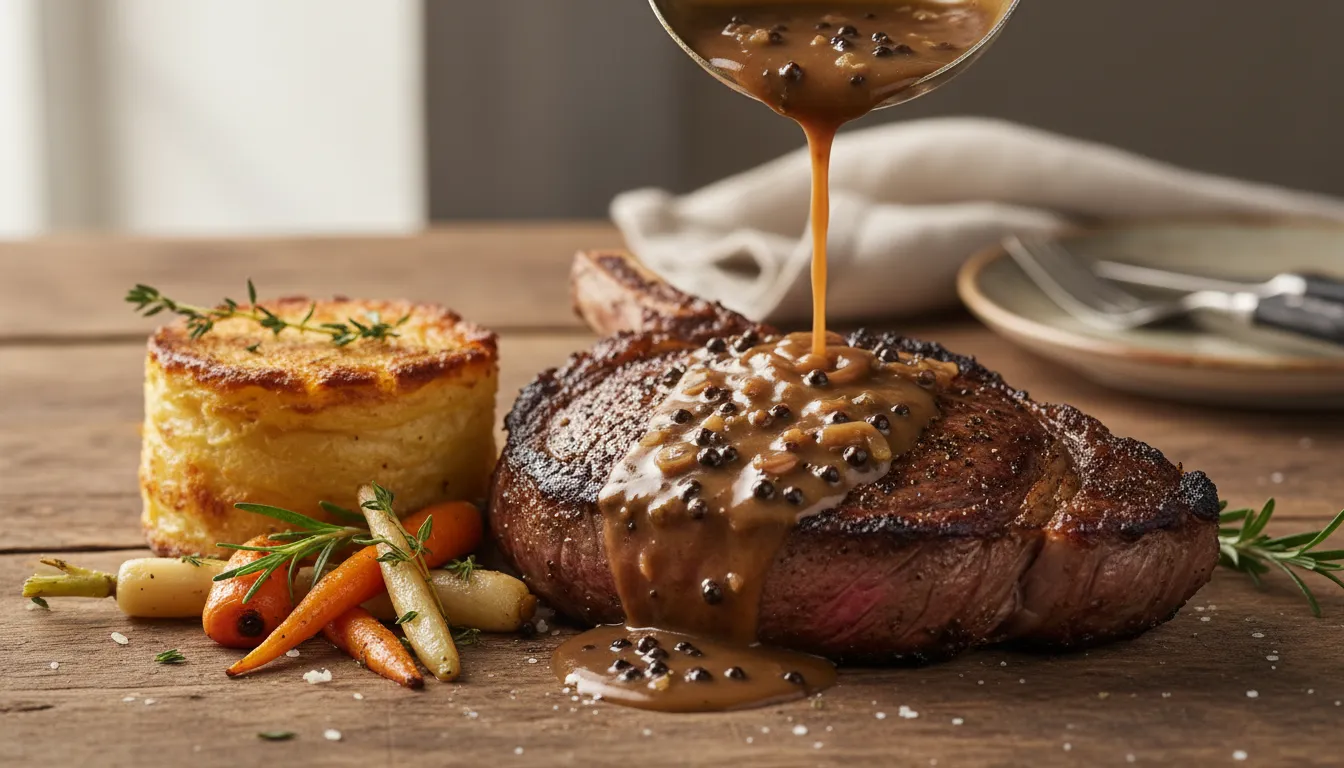
Steak au poivre is one of those great French classics that never really goes out of style. It is luxurious without being fussy, dramatic without being complicated, and when it is done properly, it feels like the kind of meal that can carry an entire Sunday afternoon on its own.
For me, the ideal version starts with a thick bone-in ribeye, cooked patiently, not aggressively. Then comes the sauce. Always the sauce. Shallots, pepper, cognac, stock, cream, and one little rebellious touch of mustard. Add a crisp potato cake with root vegetables, and suddenly a steak dinner becomes something much more complete.
This is not steakhouse broiler cooking. This is the home version. Gentler, smarter, a little less smoky, and much more forgiving. The goal is not to bully the meat with heat. The goal is to create a beautiful crust, keep the center warm and rosy, and build the kind of pepper sauce that makes you understand why the French are so devoted to sauce in the first place.
Start with the right cut
The steak here is a bone-in double ribeye, about 34 ounces, what in France would be called a côte de boeuf. It is a spectacular cut for steak au poivre because it gives you several pleasures at once: the eye of the ribeye, the cap, and all the flavor that comes from cooking meat on the bone.
There is a reason thick bone-in steaks feel special. The bone helps protect part of the meat as it cooks, so you get a more nuanced doneness, especially if you like the center rare to medium-rare. And, simply put, meat cooked on the bone has more character.
A good steak is not defined by being perfectly lean. In fact, the opposite is often true. What makes a ribeye so delicious is the relationship between fat and lean. Those little pockets of fat are not flaws. They nourish the meat as it cooks. You can always trim around them on the plate if you want, but during cooking they are part of what makes the steak succulent.
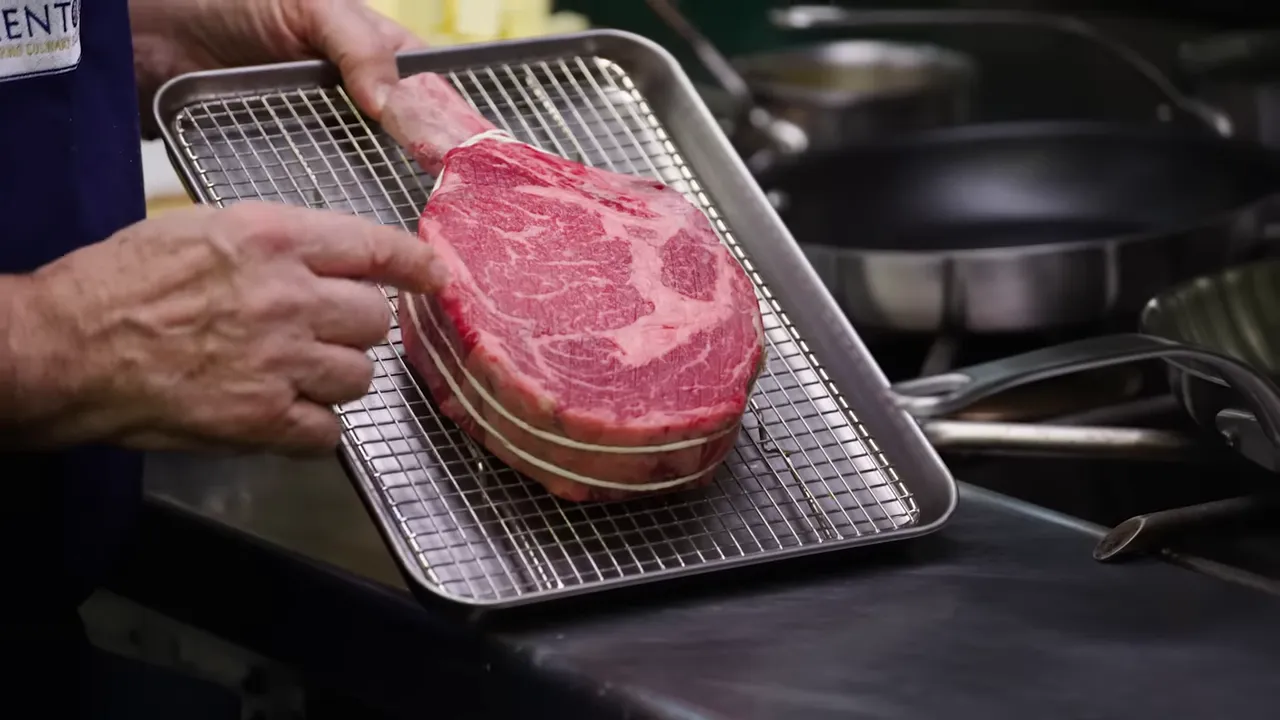
One useful detail is tying the steak with kitchen string. On a thick ribeye, especially one with a cap, tying helps the meat hold its shape and keeps everything together while it cooks.
Tempering the steak matters, but not always in the same way
If you are cooking a thick steak, let it sit out for about 20 minutes before it hits the pan. This slight tempering helps the center warm a bit, so you can cook the meat rare or medium-rare without ending up with a cold interior.
There is one exception. If you love your steak very rare, you may choose not to temper it much at all. But even then, the goal is not cold meat in the middle. The goal is warm, rosy, tender meat inside a properly seared crust.
This is one of the central ideas of great steak cooking at home: don’t just chase color on the outside. Think about the temperature all the way through.
Season simply, but season with confidence
The seasoning begins with sea salt and pepper. For the pepper, a classic au poivre can absolutely be made with black pepper alone, but a blend can be wonderful if you have one. Different peppers bring different fragrance and complexity. Black, green, and pink peppercorns all contribute something distinct.
You can season in advance, but not too far ahead. In a restaurant kitchen, the steak is typically seasoned when the order comes in, then cooked right away. At home, that approach works beautifully too.
There are many theories about steak. Dry brine it. Don’t dry brine it. Flip once. Flip many times. Cast iron only. Stainless only. The truth is that technique matters more than dogma. What matters is seasoning the steak properly and cooking it in a way that gives you control.
The best way to cook a thick steak at home: patient pan-searing
In a steakhouse, you may have a broiler blasting at 1200 degrees. At home, you probably do not. So the smart move is to adjust your method to the equipment you actually have.
A heavy pan is ideal, whether that is stainless steel, cast iron, or copper. The key is consistent heat.
For the fat, using a little rendered beef fat is a brilliant touch if you have trimmings from the steak. Clarified butter helps too, because it tolerates heat better than whole butter. The beef fat can be rendered with aromatics like garlic and thyme, then used to cook the steak in its own flavor.
This is also a useful general principle: keep your trimmings. Pork, beef, veal, whatever you are cooking, those trimmings can become flavor.
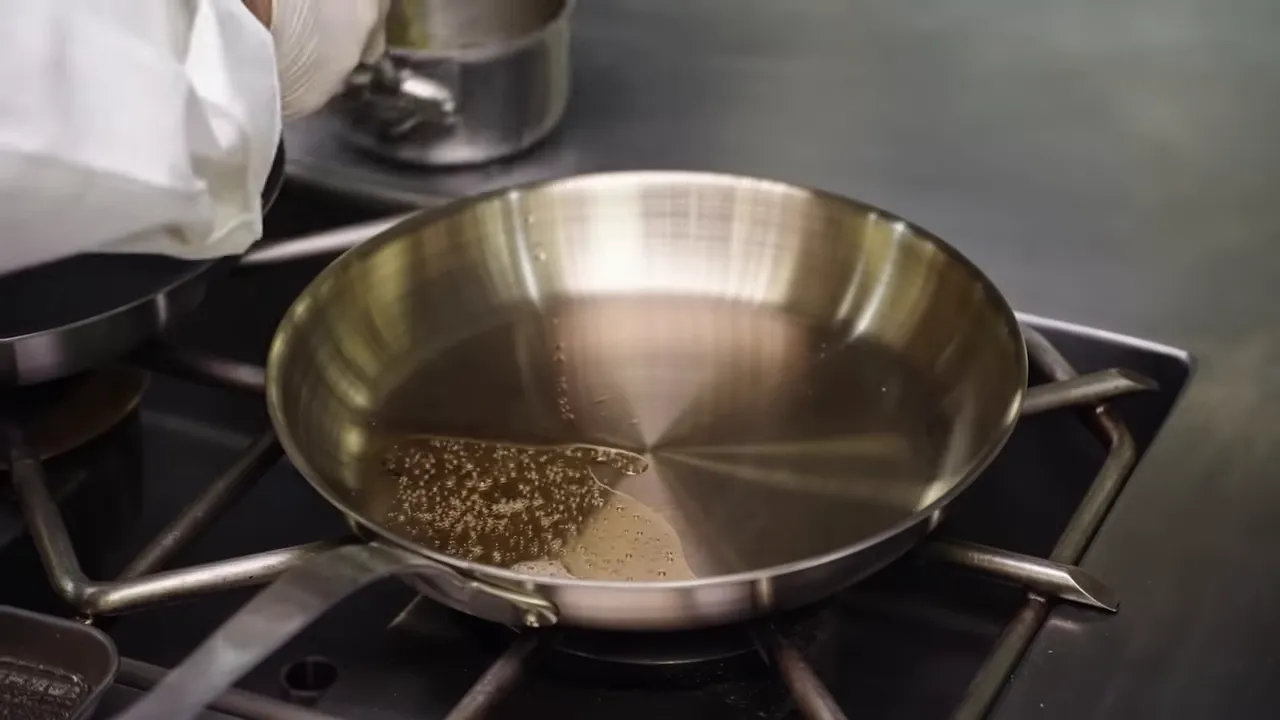
What the pan should sound like
The heat should be around medium to medium-high. You want the fat bubbling and crackling, what I like to call making music. That is the right sign.
You do not want the kitchen full of smoke. You want sound, not drama.
If the pan gets too hot, lower it. If the steak is not searing enough, raise it a little. The point is control. This is not a race.
Turn often, don’t burn
For a thick ribeye, repeated turning works beautifully. Rather than leaving the steak untouched for five minutes on one side and then five on the other, turn it gradually and often. This helps the heat move gently inward and cook the steak more evenly.
That method gives you:
A thinner, more elegant crust
Better heat distribution from one side to the other
Less risk of a burnt exterior and undercooked center
Less smoke in the kitchen
Use a fork carefully if you need to move the steak, but never stab the center. Go into the side or into a less important edge, not the prime center of the meat.
Garlic can go into the pan for aroma, especially if you love that flavor. It is there mainly to perfume the fat. If it starts burning, remove it.
Cooking this way takes about 10 minutes or so for a thick steak to reach medium-rare, though exact timing will always depend on thickness, pan, and heat. More important than the clock is the feel of the meat. Touch tells you a lot.
The steak should then rest. Resting allows the outer heat to move inward. The outside may be hot while the center is still cooler than you want. Resting evens that out.
The side dish that makes it a meal: potato and root vegetable darphin
A great steak deserves more than a random side. Here, the companion is a crisp, rich potato cake in the style of pommes Darphin, made with potatoes and root vegetables.
The combination used here is:
Potato
Celery root
Carrot
Black truffle, when in season
The vegetables are cut into very fine matchsticks, almost a julienne. You can do this with a mandoline if you are skilled and careful, or with a food processor if you want a more practical home approach.
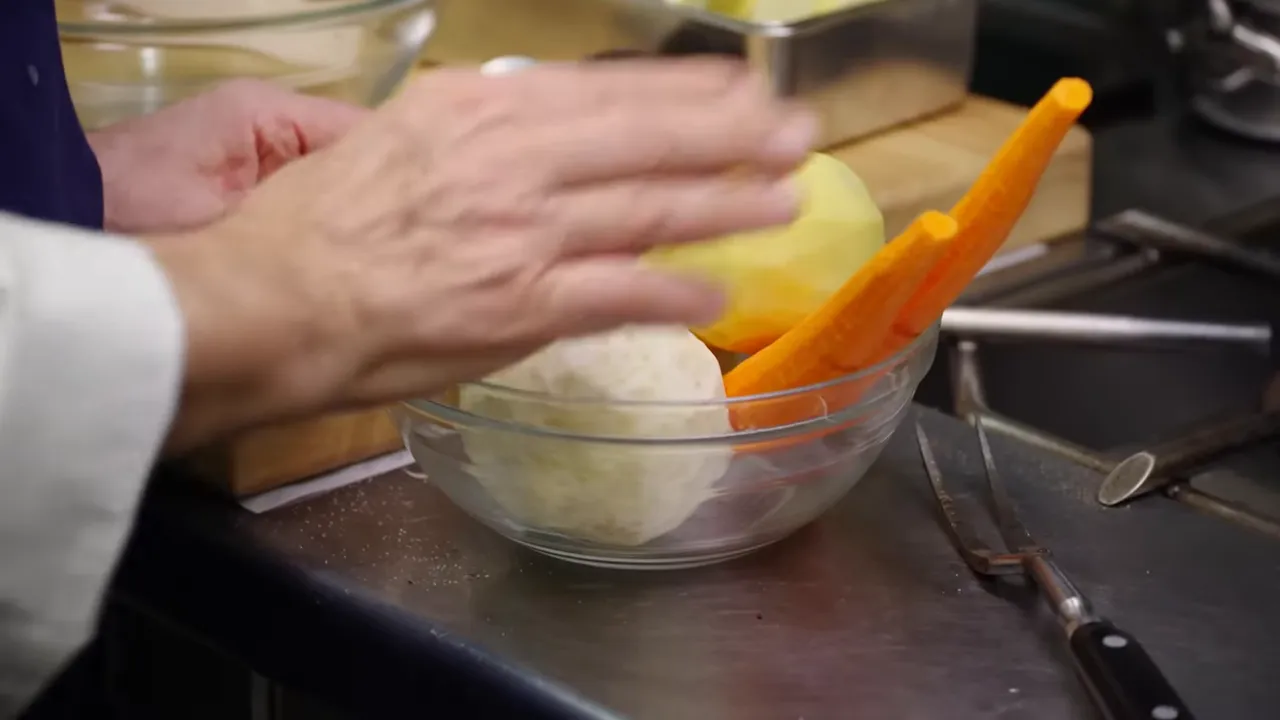
The potatoes are not negotiable because their starch helps bind the cake together. The root vegetables add sweetness, earthiness, and complexity. Truffle is optional, of course. If you do not have truffle, mushrooms are a perfectly sensible substitute.
Clarified butter goes into the pan first, though oil can also work. Once the shredded mixture is in the pan, compress it firmly. Press the top. Press the sides. Make it even and compact. The idea is to create one cohesive cake that crisps beautifully on the outside while steaming and softening in the center.
Add a little butter on top as it cooks. Move the pan lightly to keep the browning even. Listen again for that gentle frying sound. Not smoking, not scorching, just steady cooking.
Then comes the moment of truth: the flip.
You really only get one good one, so make it count. If the first side is properly browned, half the cooking is already done. It should be crusty and golden outside, moist underneath, and stable enough to turn in one piece.
The secret to a great steak au poivre is the pan sauce
This is where the dish becomes unmistakably French.
The sauce should be made in the same pan used for the steak. Remove any burnt aromatics if needed, but keep what matters most: the rendered fat, the pepper, and especially the browned bits on the bottom of the pan. In French cooking, these caramelized juices are precious. They are flavor waiting to be dissolved.
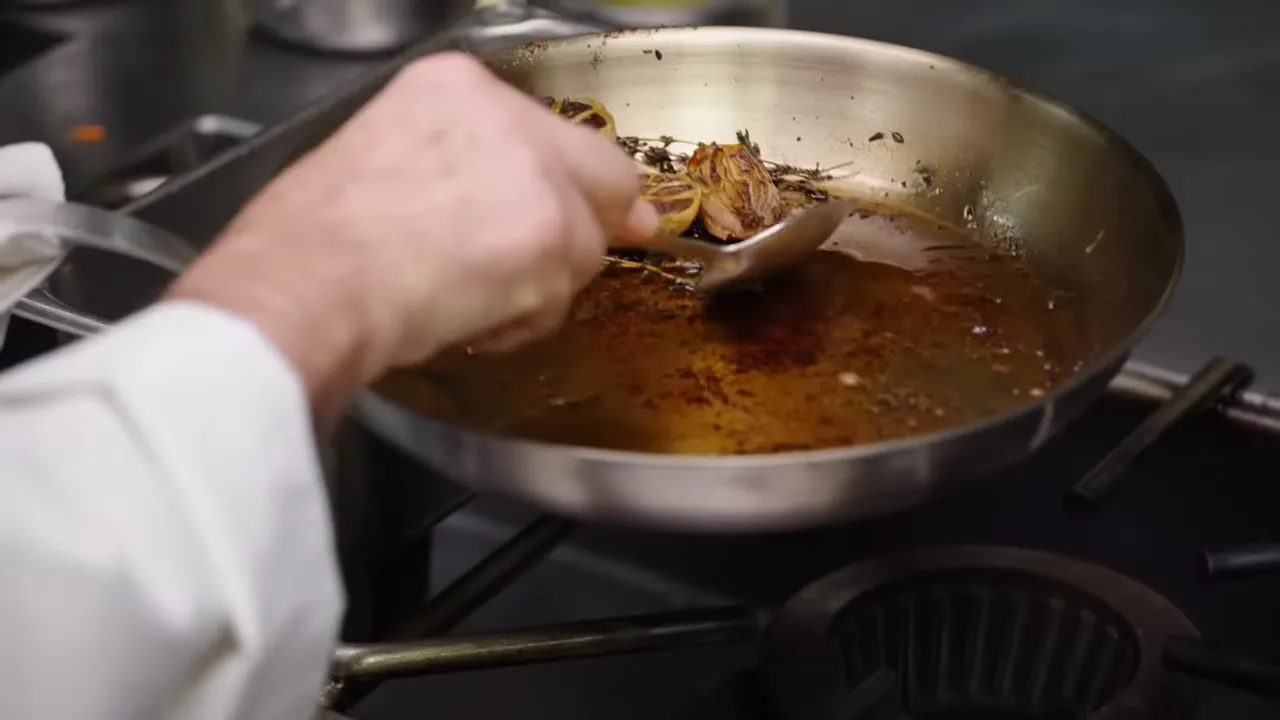
Before starting the sauce, give the rested steak a quick return to the pan just to warm it through. Then set it aside and move on to the shallots.
Build the sauce in layers
Start with:
Butter
Shallots
Extra cracked pepper
The shallots should soften and lightly color, but not burn. Then comes the cognac. If you are comfortable flambéing, ignite it carefully to burn off the alcohol while keeping the aroma. If that feels too theatrical, simply let it simmer down. Bourbon also works if cognac is not available, though cognac keeps the dish squarely in the French tradition.
For body, add a rich beef stock or demi-glace. Reduce it hard until it becomes intensely concentrated, almost glossy. Then add cream.
The cream is a personal preference, but a very good one. It softens the pepper and rounds out the sauce so it clings beautifully to the meat.
And then comes the unexpected little move: a bit of mustard.
It is not the most orthodox step, but it gives the sauce an extra kick, a little edge underneath all that richness. That small amount of mustard wakes everything up without taking over.
If the sauce gets too reduced or too shiny, add a splash of water. There is nothing wrong with cooking with water. Sometimes that is exactly what brings a sauce back into balance.
The final flavor should be rich, peppery, creamy, roasted, and just sharp enough from the mustard and shallots to keep you coming back for another bite.
How to slice a côte de boeuf properly
A bone-in ribeye gives you multiple textures, and slicing it thoughtfully means everyone gets a little of each.
First, remove the bone, but leave a little meat attached. There is always someone who loves that part, and rightly so. Around the bone, there is often intensely flavorful meat that should not be wasted.
Then separate the eye from the ribeye cap if you want a more elegant presentation. The eye gives you the classic center cut texture. The cap is looser, fattier, and in many ways even more delicious. It has a different grain and a different richness, and the roasted edge on the cap is a delicacy all by itself.
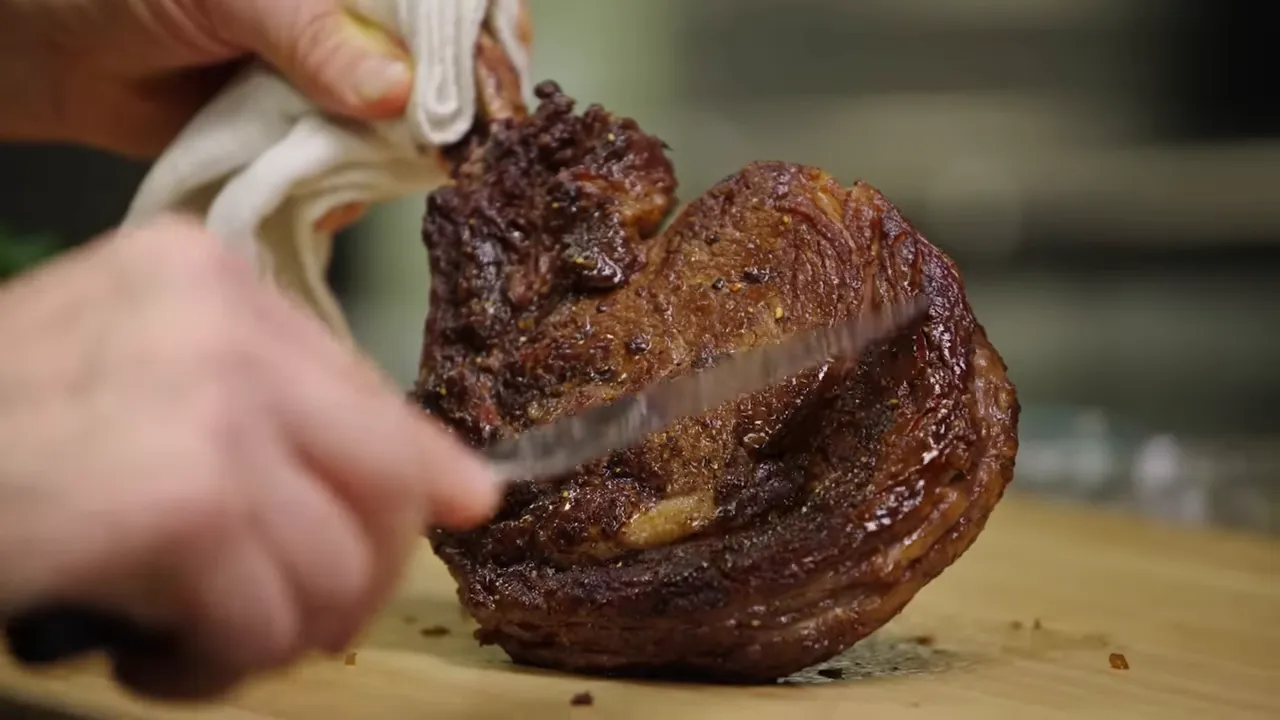
The ideal doneness here is a gradient:
Rare in the middle
Medium-rare around it
Well seared on the outside, but not thick and overcooked
That thin crust is important. It is one of the signatures of careful steak cooking. You want the seared flavor, but not a heavy dry shell around the meat.
The finishing touches matter more than people think
Once plated, the steak gets a few final details that make the dish feel complete.
First, watercress. This may seem simple, but it is a smart pairing. Watercress is naturally peppery and slightly spicy, so it echoes the flavors of the sauce and refreshes the richness of the beef.
Then the sauce goes over or alongside the steak in generous quantity. And yes, generous is the right word. In this style of cooking, the sauce can be almost half the pleasure of the dish.
A drizzle of flavored beef fat adds shine and deepens the savory aroma. Finally, a touch of flaky salt goes over the top like tiny snowflakes.
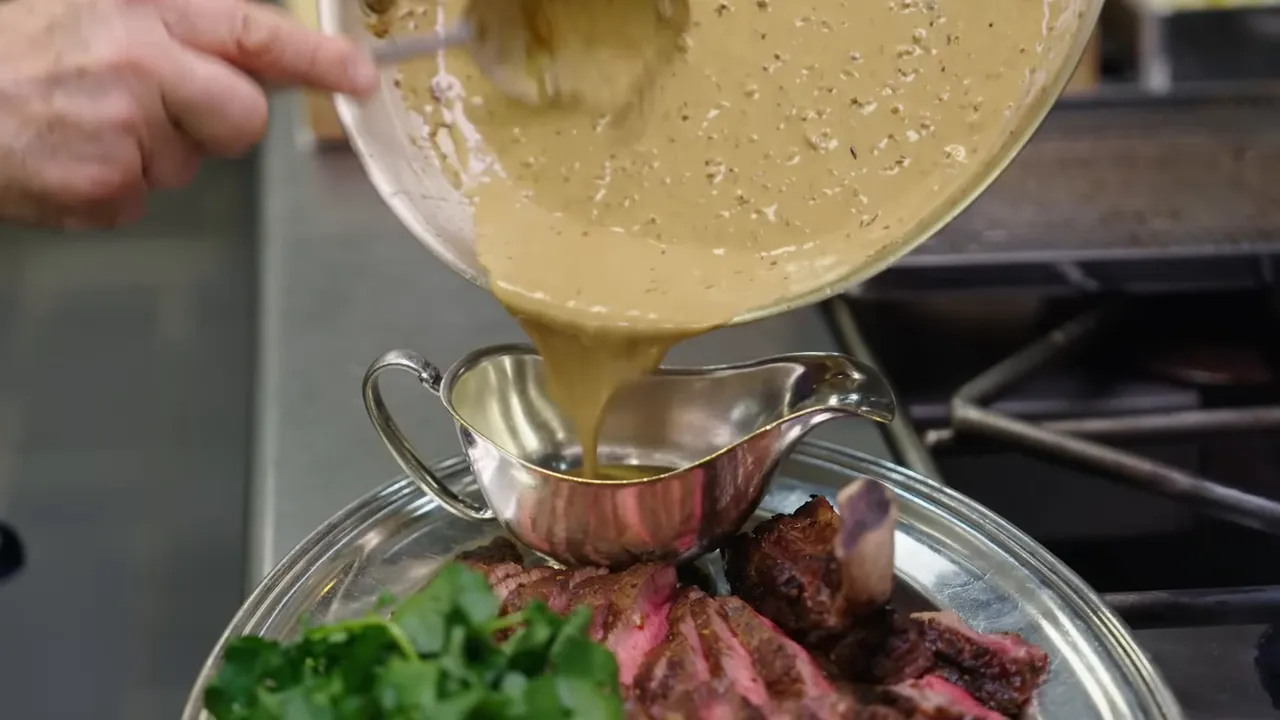
Served with the crisp potato and root vegetable cake, this becomes the kind of lunch or dinner that feels relaxed and grand at the same time.
Why this French steak still feels timeless
Part of the beauty of steak au poivre is that it is not just about luxury. It is about memory. A good bite of peppery steak with cognac cream sauce can take you back somewhere. A first great bistro meal. A Sunday table. A celebratory dinner. The food carries the place with it.
That is why the dish still resonates. It is classic, yes, but it is also emotional. You cut into a thick ribeye, spoon over the sauce, break into the crust of the potato cake, and suddenly the meal feels rooted in something older than trend.
And despite its elegance, the method is practical. Don’t be scared of it. Respect the heat. Give the steak time. Keep the pan from smoking. Build the sauce from what the pan gives you. If you flambé, do it carefully and do not set the house on fire. If you skip the flambé, the dish will still be delicious.
A simple roadmap for success
If you want the whole process condensed into a few essentials, here it is:
Choose a thick bone-in ribeye with good marbling.
Temper it briefly so the center is not cold.
Season with sea salt and pepper, ideally a fragrant pepper blend.
Sear patiently in beef fat and clarified butter over medium to medium-high heat.
Turn often for even cooking and a thinner crust.
Rest the steak before the final warm-up.
Make the sauce in the same pan with shallots, pepper, cognac, stock, cream, and a little mustard.
Serve with something crisp and earthy, like a potato and root vegetable cake.
Finish with watercress, flaky salt, and confidence.
FAQ
What cut of steak is best for steak au poivre?
A thick bone-in ribeye, or côte de boeuf, is an excellent choice. It has great marbling, benefits from cooking on the bone, and gives you both the ribeye eye and the cap for different textures.
Should I let the steak come to room temperature before cooking?
For a thick steak, letting it sit out for about 20 minutes is helpful. It does not need to become fully room temperature, but taking the chill off helps the inside warm more evenly during cooking.
Is it better to flip steak once or multiple times?
For a thick steak cooked at home, flipping multiple times can give a better result. It encourages gradual, even cooking and helps create a thinner, more refined crust without overcooking the exterior.
Can I make steak au poivre without cognac?
Yes. Cognac is classic, but bourbon can also work. If you use alcohol, simmering or flambéing helps remove the harshness while keeping the flavor.
Do I need demi-glace for the sauce?
No. A rich beef stock works well, especially when reduced. Even without stock, the pan drippings and browned bits from the steak will still produce a flavorful sauce, though stock adds more depth.
Why add mustard to an au poivre sauce?
A small amount of mustard adds an extra kick and balances the richness of the cream and beef. It is a personal touch, not a strict rule, but it makes the sauce more lively.
What should I serve with steak au poivre?
A crisp potato side is a natural match. A pommes Darphin style potato cake with root vegetables works especially well because it brings both texture and earthiness. Watercress is also an excellent finishing garnish because of its peppery freshness.
There are many ways to cook steak, but this one has everything I want. A properly marbled ribeye. A crust that is thin and deeply savory. A center that stays tender and warm. A sauce with real personality. And potatoes crisp enough to deserve their place on the plate.
That is the charm of this dish. It feels refined, but it still tastes like home cooking. French, yes. Luxurious, definitely. But at heart, it is simply one of the most satisfying ways to cook steak.